
Informing and engaging citizens

The Scottish Parliament’s record on women’s representation is in the balance
Since its establishment, the Scottish Parliament has set the standard in the UK for gender representation, with elections in 1999 and 2003 bringing record numbers of women into the legislature. Since then, however, progress towards a consistent equality has stalled. In the latest post in our Gender and Democracy series, Meryl Kenny of the University […]
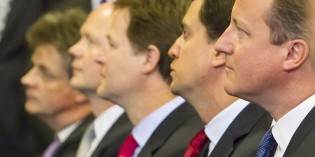
The professionalisation of politics makes our democracy less representative and less accessible
The rise of the professional politician has been a noted trend in recent years. The leaders of our major parties reflect this – David Cameron, Ed Miliband and Nick Clegg were all political advisers before becoming MPs. Peter Allen has researched this phenomenon and argues that, although careerism is not quite as widespread as some […]

Face to face contact is still the most effective way to persuade people to participate in elections
Nudge theories have never been more popular, and have even found their way into the heart of Government. Joe Simpson of the Leadership Centre asks whether ‘nudge’ based thinking could play roll in increasing electoral participation, and demonstrates what we can learn from recent political campaigns in America. The evidence shows that despite a number of […]

Where candidates live matters to voters, and they show it in their voting
That voters prefer to elect local candidates is a long-held assumption of British politics. Professor Jocelyn Evans’ research has sought to test that assumption. He found that the geographical distance between candidates’ homes and the constituency had a measurable impact on voting behaviour. In this post he shares his findings and argues that voters should […]

Democratic round-up: the Transparency of Lobbying, Non-Party Campaigning and Trade Union Administration Bill
The Government’s Transparency of Lobbying, Non-Party Campaigning & Trade Union Administration Bill receives its Second Reading the House of Commons today. Criticism has been rife, with campaigners on the left and right taking issue with provisions which it is said could limit free speech. Here, Sean Kippin takes a look at the must-read analysis, news […]

Free Schools set the standard for school accountability to the local community
Free Schools, given their freedom from local authorities, have been criticised for lacking accountability, including by Chris Waterman recently on Democratic Audit. Here Natalie Evans, Director of the New Schools Network, argues that, on the contrary, Free Schools are in fact more transparent and accountable than the majority of schools. Subject not only to the same inspections and […]

Book Review: The Politics of Expertise: How NGOs Shaped Modern Britain
The Politics of Expertise offers a challenging new interpretation of politics in contemporary Britain, through an examination of non-governmental organisations. Using specific case studies of the homelessness, environment, and international aid and development sectors, it seeks to demonstrate how politics and political activism has changed over the last half century. There’s a compelling argument in this […]
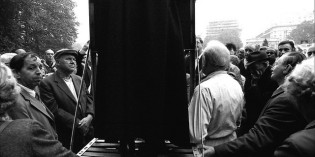
The lobbying bill risks gagging charities and campaign groups, while letting lobbyists of the hook
The Government’s Transparency of Lobbying, Non-Party Campaigning & Trade Union Administration Bill will receive its Second Reading on September 3rd. Critics of the Bill have been unequivocal about legislation which has been described by some commentators as a ‘dog’s breakfast’. Here, Peter Bradley of Speakers’ Corner Trust argues that the Bill not only misses a real opportunity to introduce […]

Voters punish politicians for misinformation that portrays them in a favourable light, but not for inaccurate information that attacks their opponents
What impact does inaccurate information have on political campaigning? Outlining the results of three studies on the role of misinformation in politics, Michael D. Cobb finds that voters react to positive and negative information in very different ways. While negative misinformation, such as using false figures to attack a political opponent, tends to linger in the minds […]
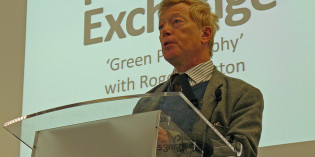
A response to Roger Scruton: no, democracy is not overrated
In a widely discussed article for the BBC’s ‘a Point of View’ series, the conservative Philosopher Roger Scruton argues that democracy is overrated, and that we should value equal freedom and the protection of human rights ahead of it. Philip Pettit of Princeton University argues that Scruton is wrong to distinguish between the three, and that democracy […]
 Democratic Audit's core funding is provided by the Joseph Rowntree Charitable Trust. Additional funding is provided by the London School of Economics.