Informing and engaging citizens

Despite the availability of social media as a campaign tool, 2010 was business as usual for constituency level campaigners
The arrival of the internet, especially social media, was thought by many to offer a chance at democratic renewal, as it allows for greater interaction between citizens and their representatives. Benjamin Lee researched the use of social media by candidates at the 2010 general election. In this post he sets out his findings, showing that […]
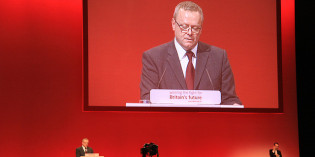
Labour’s union reforms risk handing power to the frontbench at the expense of party members
The controversy surrounding the Labour selection process in Falkirk has seen the party’s formal links with the trade union movement questioned. In response to this, Ed Miliband announced a series of reforms that go to the heart of this decades old relationship. But, according to Eric Shaw, while these reforms would end certain anomalies, they […]

The CPS claims that the BBC has a left-of-centre bias in its coverage of Think Tanks, but closer analysis shows that it is much more even handed
With the next BBC Charter Review not too far off, public and political opinion about the broadcaster is going to be increasingly important. The recent CPS report “proving” bias at the BBC got substantial media exposure, yet Gordon Ramsay of the Media Standards Trust argues that in replication the report’s findings don’t stand up. Similar PostsHow well […]
Young Britons should vote early, and vote often
The Australian Federal Election again showed that making turnout mandatory is proven to increase turnout, with over 86% of the population voting, compared to just 65% in the UK’s 2010 General Election. Professor Sarah Birch argues that the time has come to tackle the crisis of youth disaffectedness with politics by introducing compulsory voting for the […]

Interview: Philip Coggan of the Economist – “We may have ‘one person – one vote’, but we don’t have ‘one person – equal influence'”
Philip Coggan, aka ‘Buttonwood’ of the Economist, recently spoke to Democratic Audit’s Sean Kippin about his new book ‘The Last Vote: the Threats to Western Democracy’, where we’ve gone wrong and how we might go about confronting the challenge. In the second part of this two part interview, Coggan talks about the threat of the financial system to our democracy, […]
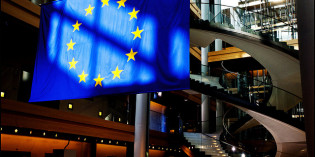
Hand-waving as renegotiation: The UK’s (and EU’s) limited options
David Cameron has committed a future majority Conservative Government to a renegotiation of the terms of British membership of the European Union, followed by an in/out referendum. While much has been made of the political implications of a British exit, less attention has been paid to the substance of what a renegotiated settlement might amount […]

Interview: Philip Coggan of the Economist on the West’s democratic decline and how to fix it
Philip Coggan, aka ‘Buttonwood’ of the Economist, recently spoke to Democratic Audit’s Sean Kippin about his new book ‘The Last Vote: the Threats to Western Democracy’, where we’ve gone wrong and how we might go about confronting the challenge. In part one of this two part interview, Coggan urges us to treat our next vote as if […]

Party conferences are far from perfect, but our democracy would be worse off without them
The Liberal Democrats began their party conference over the weekend, with Labour and the Conservatives following suit before the month ends. But with their democratic purpose being hollowed out, there is some confusion as to what role they actually play. Dr Robin Pettitt argues that although they aren’t what they once were, they still serve […]

The debate on accountability of public service partnerships needs to be evidence based
The Democratic Audit blog has previously carried articles on government outsourcing by Stephen Wilks and Dan Silver – who argued that the government policy in this area has real implications for democracy. In response, Simon Parker of the New Local Government Network said that opponents of outsourcing were fighting the last war. Here, in response to Parker, Simon […]

How biased is the BBC?
As a state broadcaster funded by license fee-payers, the BBC is expected to maintain strict impartiality in its news and current affairs coverage. Despite this, the BBC is regularly accused of bias. Cardiff University’s Mike Berry uses his research to tackle a question as old as broadcasting itself: is the BBC really impartial? If you […]
 Democratic Audit's core funding is provided by the Joseph Rowntree Charitable Trust. Additional funding is provided by the London School of Economics.