
Elections and electoral systems
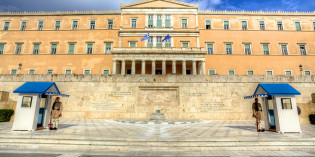
Greek lessons for the UK’s referendum
What lessons can the UK derive from the Greek referendum ahead of its own vote on EU membership? Richard Rose writes that there were four key flaws in the Greek referendum that the UK should aim to avoid: an unclear question, a rushed campaign, the tendency to downplay the influence of other EU states over […]

Was the 2015 election the most disproportional ever? It depends how you measure it
The 2015 election has been described as both one of the most disproportional elections ever and one of the least. Alan Renwick discusses the notion of electoral disproportionality and weighs up the relative merits of the different indexes that have been developed to measure it. Similar Posts16 things you need to know about what will […]
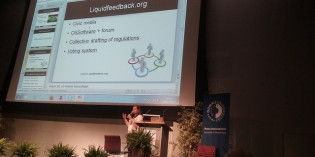
Online communities and the law: how e-participation is changing voting rights
Can digital democracy facilitate the creation of a new, computer-oriented direct democracy? Silvia De Conca argues that some kind of of hybrid system might represent the best way of creating such a system, and that new tools such as LiquidFeedback.org are providing a practical example of how to marry the two approaches. It is now […]

Five minutes with Gideon Skinner: “The trend in the polling is clearly toward support for the UK staying in the EU”
What can the polling tell us about the likely result in the UK’s referendum on EU membership? In an interview with EUROPP’s editor Stuart Brown, Gideon Skinner, Head of Political Research at Ipsos MORI, discusses the recent trends in British public opinion, the potential for David Cameron’s intended renegotiation to shape the outcome, and why […]

Could Labour and the Liberal Democrats merge? If so, they should look to Canada for inspiration
The Labour and Liberal Democrat Parties are both currently reeling from disastrous 2015 election results, with both in the process of electing new leaders following the resignations of Ed Miliband and Nick Clegg. But could the two parties, until recently at loggerheads, ever become one? Alex Marland argues that the two parties should look to […]

Poor visibility and design flaws are hampering the participatory potential of the European Citizens’ Initiative
The European Citizens’ Initiative was introduced with the Treaty of Lisbon with the aim to improve and expand participation in European Union policy-making. Sergiu Gherghina and Adriana Groh argue that its potential is being hampered by poor citizen knowledge of the initiative, and multiple design flaws. Introduced in April 2012 as the world’s first element of transnational participatory […]

Electoral bias in the UK after the 2015 General Election
Most discussion of the UK’s 2015 election so far has focussed on the unexpected Conservative majority. But Charles Pattie and Ron Johnston reveal another remarkable story hidden just below the surface. The electoral system not only deals unfairly with the smaller parties. It is also biased in how it treats the Conservatives relative to Labour. But the […]

Beppe Grillo’s Five Star Movement is a new kind of radical and popular opposition to the Italian government
The comedian and TV personality Beppe Grillo has shaken up Italian politics since launching his Five Star Movement – a decentralised non-party, which rails against what it describes as a corrupt and dysfunctional political and social system. An expert on the movement, Nicolò Conti, argues that now that the party has significant parliamentary representation, it […]
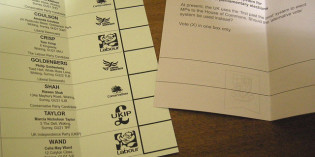
Alphabetically ordered ballots make elections less fair and distort the composition of legislatures
It is relatively well known that candidates who are first on the ballot tend to enjoy a vote advantage compared to those whose names begin with letters later in the alphabet. But how much of a difference has this made to election results? In new research which analyzes the names of members of Congress from […]
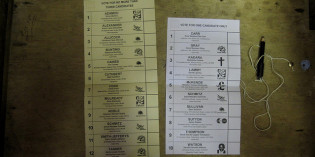
The 2015 General Election was further proof that First Past the Post is not fit for purpose
The 2015 General Election produced an unexpected majority government, however it did so despite the rise of smaller parties such as the Greens and UKIP, who between them only won 2 seats, despite polling around 5 million votes. Chris Terry and Jess Garland argue that the result shows that the First Past the Post electoral […]
 Democratic Audit's core funding is provided by the Joseph Rowntree Charitable Trust. Additional funding is provided by the London School of Economics.